Three reference models shape how I plan work, where automation earns its keep,
and how testing sits inside delivery—not as a gate at the end, but as a thread
through the whole pipeline.
Click any diagram for a full-screen view.
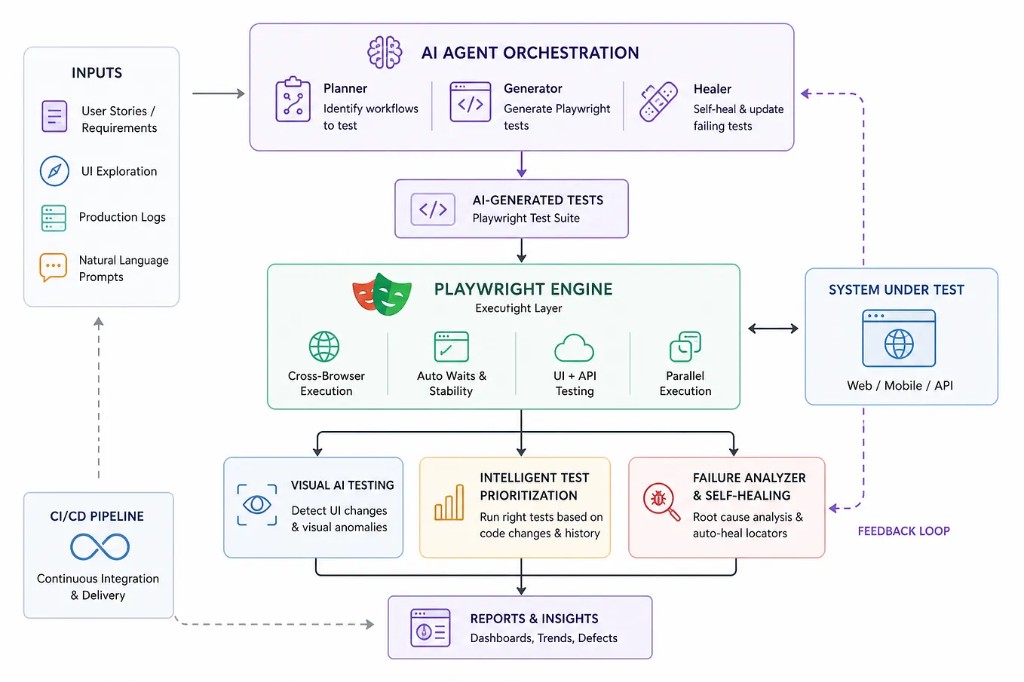
AI-assisted Playwright automation.
Inputs (requirements, UI exploration, production logs, natural-language prompts)
feed an orchestration layer—plan which flows to cover, generate tests, heal broken
locators—executed by Playwright against the system under test. Visual checks,
intelligent prioritization, and failure analysis feed reports and a feedback loop
back into CI/CD. This is the shape of the tooling on this site: repeatable runs
with room to adapt when the product moves.
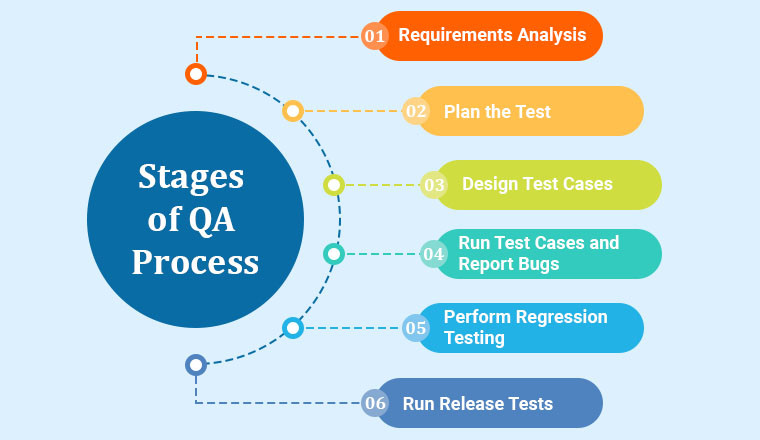
Stages of the QA process.
Requirements analysis → plan the test → design test cases → run cases and report
bugs → regression testing → release tests. I treat each stage as explicit
deliverable work (like the Partner API regression plan), not an implicit “we tested
it” checkbox—especially when a client ships an incremental extension update.
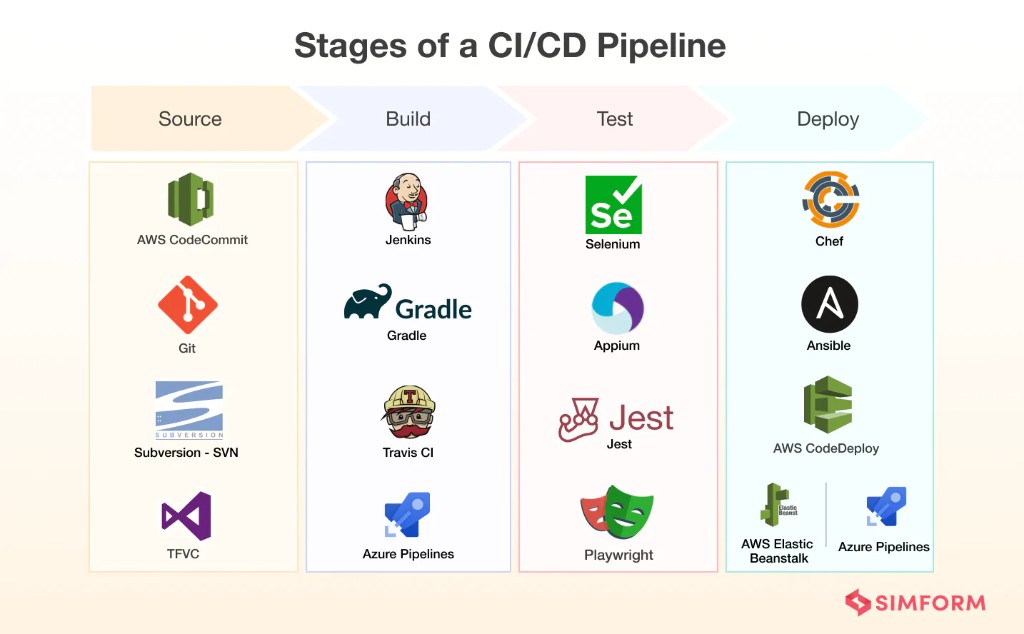
Where testing sits in CI/CD.
Source → build → test → deploy. Automated suites (Playwright, Selenium,
Jest, and peers) belong in the test stage so regressions surface before deploy—not
after. Cron jobs, extension builds, and operator dashboards I maintain are meant to
plug into that rhythm: fast signal on every meaningful change.